
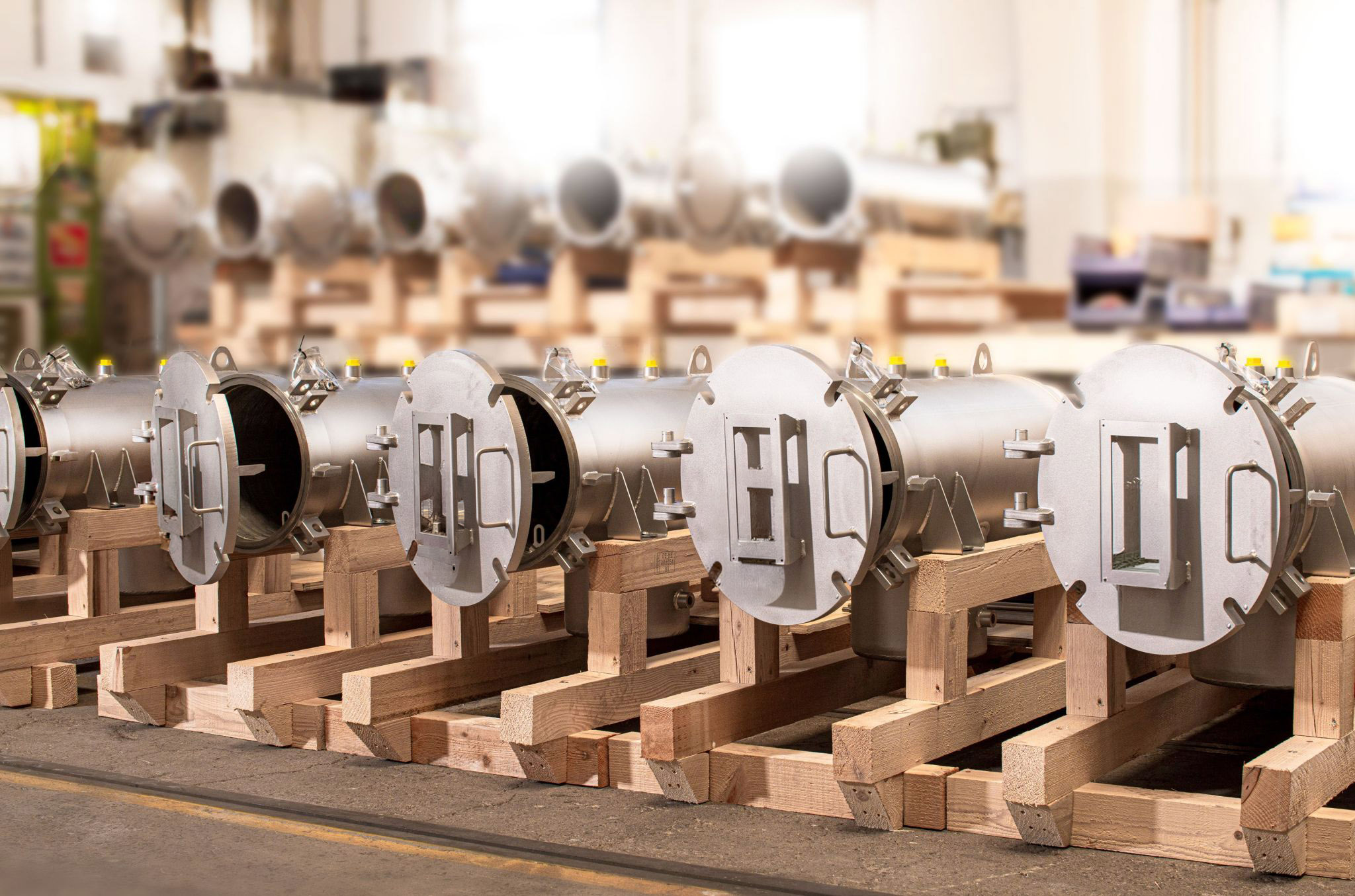
Water in the Sump Drain of a Fixed Filter/Water Separator (FWS)

Water control in aviation fuel systems is one of the most critical disciplines in the global fuel supply chain. Whether at a refinery, fuel farm, hydrant system, or into-plane operation, the presence and control of water directly affect safety, reliability, and regulatory compliance.
Among all potential contaminants, water presents one of the most complex operational challenges. It is also one of the most critical contamination risks in jet fuel because it can promote microbiological growth, corrosion, and—most critically—ice formation in aircraft fuel systems. Therefore, operational focus must be on keeping free water as low as possible.
A frequent operational scenario illustrates this clearly: during the morning check of a fixed Filter/Water Separator (FWS), water is observed in the first sump drain.
For experienced professionals, this observation immediately raises questions:
- Is this normal thermodynamic behavior?
- Does it confirm proper filtration performance?
- Or is it a precursor to system failure?
As indicated in our recent ARC NV & Group CeSAR Aviation Fuel Quiz, more than one answer may be correct.
Let’s analyze the situation from the perspectives of fuel quality, filtration performance, and compliance. The answer depends on context, quantity, and trends.
This article provides a technically structured interpretation of morning sump water, explains the engineering and physical principles involved, and reinforces why disciplined water management remains essential to aviation fuel safety and compliance.
The Nature of Water in Jet Fuel
Jet fuel can contain water in two primary forms:
- Dissolved water, which is invisible and chemically held in solution.
- Free water, which appears as dispersed droplets, haze, or bulk accumulation.
The ability of jet fuel to hold dissolved water is temperature-dependent, up to approximately 100 ppm, dissolved water cannot be removed by conventional filtration. Only free water can be separated by coalescence and gravity. At higher temperatures, fuel can retain more dissolved water. As the temperature decreases, the fuel’s capacity to hold water reduces, and dissolved water may precipitate out of solution, appearing as haze, droplets, or free water.
This thermodynamic process explains why water is often observed during morning sump drains. Overnight cooling of fuel in vessels, pipelines, or filter bodies may cause dissolved water to condense into free water droplets. Because water is denser than fuel, it settles to the lowest point — typically the sump.
This phenomenon is normal and predictable. However, determining whether the observed water is within acceptable limits requires knowledge of filtration function and system behavior.
The Engineering Function of the Filter/Water Separator
A fixed Filter/Water Separator is designed to remove free water and particulate contamination from aviation fuel. It does not remove dissolved water.
According to EI 1550, the process occurs in stages:
- Fuel enters the vessel and passes through coalescer elements.
- These elements filter solids and coalesce fine dispersed water droplets into larger droplets.
- The coalesced droplets pass to the separator elements.
- Separator elements repel water and prevent it from continuing downstream.
- The separated water settles by gravity into the sump.
The sump is not an incidental feature; it is a fundamental part of the protective design. Its purpose is to collect separated free water for controlled removal.
Therefore, finding water in the sump does not automatically indicate a malfunction. In many cases, it confirms that the system is performing its intended function.
However, effective filtration depends not only on separation efficiency but also on proper sump management.
The Critical Role of Sump Management
The presence of a sump is only protective if water accumulation is actively controlled. If free water is allowed to accumulate excessively, the following risks increase:
- Reduced separation efficiency
- Re-entrainment of water droplets
- Downstream carryover
- Corrosion and microbial growth within the vessel
Industry guidance emphasizes that free-water management is critical to maintaining filtration performance. Excessive accumulation can impair the performance of the coalescer and separator elements and may ultimately pass downstream.
In practical terms, the sump acts as a containment barrier — but only when it is regularly drained and monitored.
Interpreting Morning Sump Water: Three Possible Scenarios

When water is found in the first sump drain during a morning check, three interpretations must be considered.
1.Normal Overnight Condensation
If the fuel cooled overnight, dissolved water may have precipitated into free water and settled in the sump. In this case:
- The quantity is typically small.
- Downstream fuel remains clear and bright.
- No abnormal differential pressure trends are observed.
This scenario reflects normal thermodynamic behavior and confirms that the sump is performing as designed.
This explains the answer:
C. The fuel cooled overnight in the vessel, and some water settled out.
This is not abnormal. It is a predictable physical phenomenon.
2.Effective Removal of Upstream Free Water
Free water may enter the system from upstream sources such as:
- Tank breathing and condensation
- Rain ingress at storage facilities
- Supply chain disturbances
- Maintenance activities
In this case, the FWS coalesces and separates the incoming water, preventing it from reaching downstream equipment.
Water in the sump under these circumstances demonstrates correct barrier performance.
The key question becomes: Is the quantity within expected operational norms?
Therefore, if water is found in the sump:
B. The filter elements are working and have separated some water from the fuel.
This can be a positive indication of effective separation, provided the water quantity is within expected limits and downstream fuel is clean and bright.
3. Abnormal Quantity Signaling Upstream Failure
Now we address the answer:
A. The filter elements are not working correctly.
This answer can also be correct — but only under certain conditions.
EI 1550, the industry standard, warns that if water quantities are excessive, repeatedly observed, or increasing over time, the sump may be signaling a larger problem.
Possible causes include:
- Upstream tank water accumulation
- Failure of upstream filtration
- Bulk water ingress
- Seal or drain malfunction
- Surfactant exposure causing filter disarming
- Improper maintenance
Abnormal water findings must never be ignored. If clear and bright fuel cannot be achieved after draining, or if water persists at unusual levels, equipment must be withdrawn from service and investigated immediately.
The difference between routine and abnormal lies in trend analysis and system awareness.
4.The Correct Quiz Answer
The technically accurate response is:
✔ B – The filter elements are working and have separated some water from the fuel.
✔ C – The fuel cooled overnight in the vessel and some water settled out.
⚠ A may be correct only if abnormal indicators are present.
Context determines the conclusion.
Differential Pressure as a Supporting Indicator
Differential pressure (dP) monitoring and recording during operations is mandatory under JIG operating standards and forms part of the filter performance verification process.
A stable, predictable dP trend generally indicates healthy element performance. However:
- Sudden decreases may indicate separator damage or water bypass.
- Rapid increases may indicate blockage from particulate or water accumulation.
- Irregular fluctuations may suggest internal disruption.
Water observations should never be assessed in isolation. They must be evaluated alongside differential pressure data, flow rates, and downstream sampling results.
Automation Does Not Replace Oversight
Modern installations may incorporate:
- Automatic sump drain systems
- Electronic water detection sensors
- Water defense systems that shut down flow when the sump reaches capacity
While these systems enhance protection, they are not failproof. Automatic drains may malfunction or partially drain. Sensors may become contaminated or freeze. Shutdown systems rely on proper calibration and maintenance.
Operational history repeatedly shows that reliance on automation without human verification can introduce hidden risks. Equipment must not be relied on blindly, as it can fail.
The most robust safety systems combine engineered controls with disciplined operator intervention.
Procedural Discipline and Compliance Culture

Water control is not discretionary; it is a mandatory operational requirement.
Best practice includes:
- Daily draining at the start of the shift
- Additional draining after maintenance or abnormal events
- Recording the quantity of water observed
- Performing visual and appearance checks
- Trending observations over time
- Escalating abnormal findings without delay
Documentation transforms observations into regulatory safety controls and risk management. Trend visibility enables early detection of system deterioration.
An essential mindset in aviation fuel operations
Observation → Interpretation → Verification → Documentation
- Recording data builds trend visibility.
- Trend visibility builds risk awareness.
- Risk awareness prevents incidents.
In high-reliability industries such as aviation fuel handling, small deviations often precede major failures. Morning sump drains serve as an early warning mechanism. Operational excellence is built on disciplined routine checks.
Operational Decision Framework
When water is found in the first morning sump drain, the professional response should follow a structured process:
- Quantify the water removed (trace vs excessive).
- Assess the visual appearance of the fuel.
- Confirm downstream fuel quality.
- Review differential pressure trends.
- Record findings in inspection logs.
- Compare with historical data.
- Escalate if quantity or trend deviates from norm.
- Withdraw equipment if required.
This disciplined approach aligns with JIG documentation requirements and transforms a routine drain into a control barrier within the safety management system.
Key Industry Takeaways
- Jet fuel temperature fluctuations can cause dissolved water to precipitate into free water.
- A Filter/Water Separator is designed to collect free water in the sump.
- The presence of sump water may indicate normal operation or effective separation.
- Excessive or repeated water accumulation signals upstream quality control issues.
- Differential pressure trends must be evaluated alongside water findings.
- Automation enhances protection but does not eliminate the need for manual verification.
- Daily draining, documentation, and escalation are essential elements of compliance culture.
- Water management is a primary defense against corrosion, microbial growth, and icing risk.
- The strongest safety message: never rely on equipment; procedural discipline and human diligence are essential.
Conclusion
Water in the first morning’s sump drain of a fixed Filter/Water Separator is not an inherently simple “yes or no” condition. It may reflect:
- Normal overnight thermodynamic behavior,
- Effective water separation,
- Or a developing upstream issue.
The critical factor is not the presence of water itself, but the interpretation of its quantity, frequency, downstream condition, and trend.
The aviation fuel industry relies on layered protection:
- Physical separation technology,
- Procedural draining requirements,
- Differential pressure monitoring,
- Water detection systems,
- Documentation and inspection records.
Yet every layer ultimately depends on professional human oversight.
Water is one of the most persistent variables in fuel handling. It cannot be eliminated entirely from the supply chain, but it can be controlled. Morning sump draining is more than a checklist task. It is a deliberate verification that the filtration barrier remains intact.
In aviation fuel operations, water is never “just water.”
It is a measurable risk indicator — and a defining test of operational excellence.
- Into-Plane Sampling Procedures (Must Read)
- Aviation Fuel Quality Control Training: Upholding Safety and Excellence in the Aviation Industry
If your organization would like structured filtration awareness training, Group CeSAR delivers advanced aviation fuel training and compliance programs aligned with EI, JIG, and international regulatory frameworks. Our programs are designed to strengthen operational judgment, compliance culture, and technical competence across fuel operations.
📩 Contact Group CeSAR
✉️ [email protected] | [email protected]

 Refuellers
 Dispensers
 Military Applications
 Spare Parts
 Maintenance & Repairs
 Vehicle Refurbishment
 Vehicle Inspection
 Vehicle Life Cycle Management


