
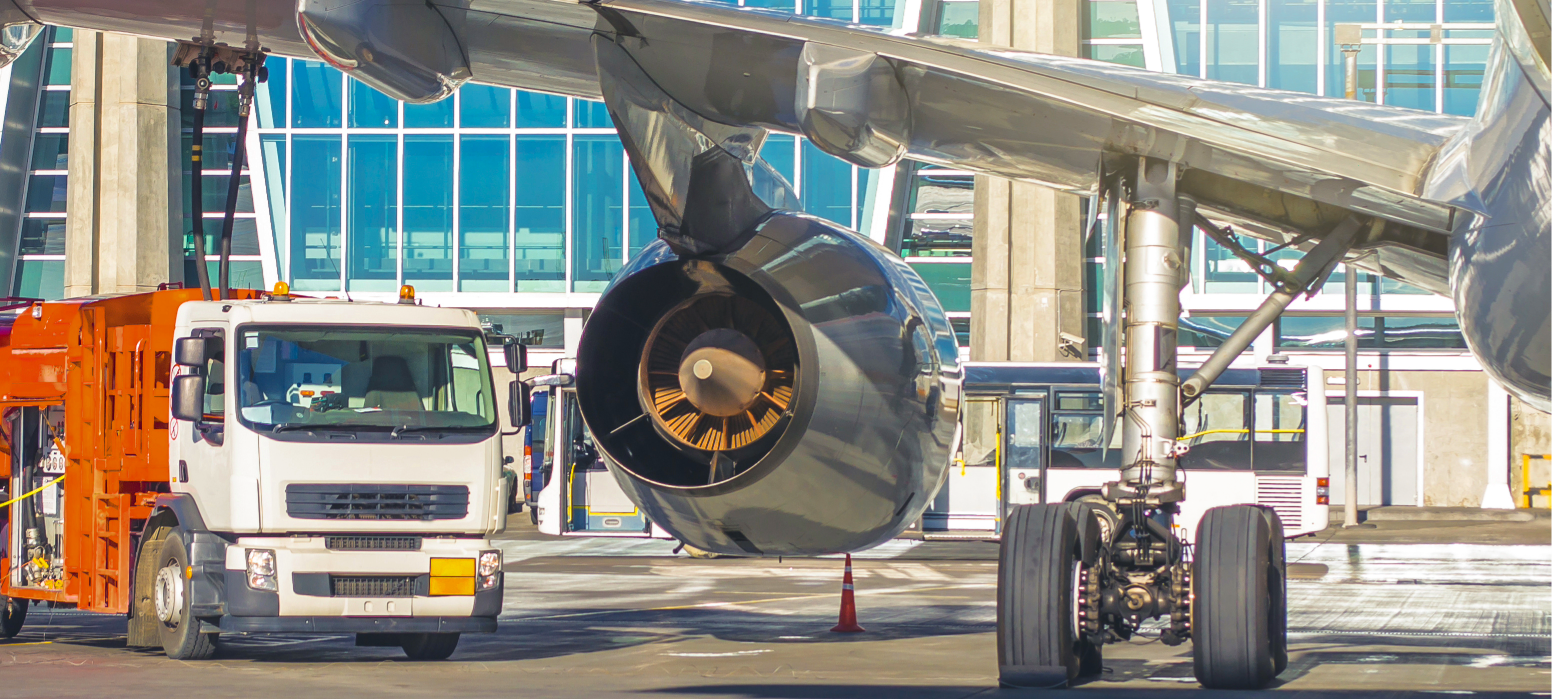

Fuel trucks are mission-critical assets that directly impact safety, on-time performance, and operational efficiency. Whether operating at regional airfields or major hubs such as Dallas/Fort Worth International Airport and Heathrow Airport, aviation fuel operators must continuously evaluate whether maintaining aging equipment remains viable—or whether replacement or refurbishment provides a stronger long-term outcome.
This evaluation is particularly critical in environments where fueling operations directly influence aircraft turnaround times and airport performance metrics.
A structured Lifecycle Cost Analysis (LCCA) provides the data-driven framework needed to make this decision. By assessing the total cost of ownership—from acquisition to disposal—operators can optimize capital allocation, reduce operational risk, and ensure compliance with evolving industry standards.
What Is Lifecycle Cost Analysis (LCCA)?
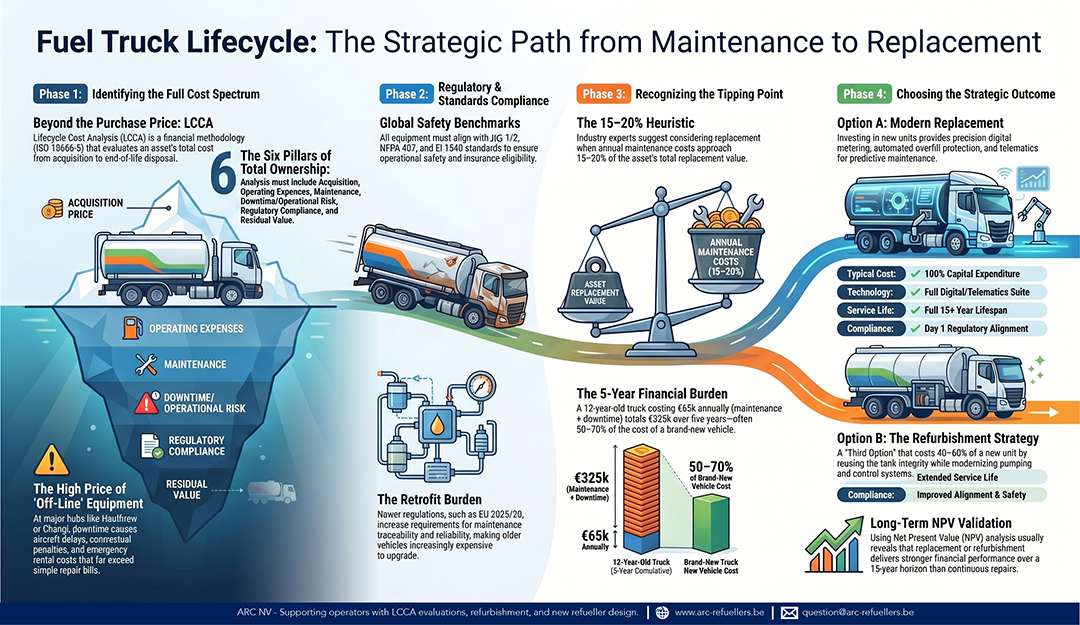
ARC NV – Supporting operators with LCCA evaluations, refurbishment, and new refueller design.
E-mail: question@arc-refuellers.be
Lifecycle Cost Analysis is a financial assessment method used to evaluate the total cost of an asset over its entire operational life. Instead of focusing solely on the purchase price or short-term repair expenses, LCCA examines:
- Initial acquisition cost
- Operating expenses
- Preventive and corrective maintenance
- Downtime and operational disruption costs
- Regulatory compliance and upgrade costs
- Residual or resale value
- End-of-life disposal
For fuel trucks, LCCA assesses whether ongoing maintenance of older units remains cost-effective or whether replacing the fleet provides better long-term value. This method aligns with recognized asset management standards, such as ISO 15686-5 lifecycle costing principles, and is particularly relevant in aviation fuelling, where reliability and safety are non-negotiable.
Understanding Fuel Truck Cost Components
Before conducting a meaningful lifecycle cost analysis, it is essential to break down and understand the full range of expenses associated with operating aviation fuel trucks.
From daily ramp operations at major hubs like Brussels Airport to regional airfields supporting cargo and business aviation, fuel trucks represent both a capital investment and a long-term operational liability. Their true cost extends far beyond the initial purchase price, encompassing acquisition, operating expenses, preventive and corrective maintenance, compliance upgrades, and eventual resale or disposal.
A clear understanding of these cost components provides the foundation for accurately comparing long-term maintenance strategies against fleet replacement decisions.
Acquisition Costs
New aviation fuel trucks can cost significantly more due to advanced pumping systems, filtration equipment, emission controls, and safety technologies. Capital investment may include:
- Truck chassis
- Tank assembly
- Pumping and metering systems
- Filtration systems (aligned with EI 1550 principles)
- Safety interlocks and bonding systems
- Digital monitoring and control systems
While upfront investment is high, modern equipment typically delivers better efficiency, improved reliability, and lower operating risk.
Operating Costs
Operating expenses include:
- Fuel consumption
- Driver labor
- Insurance
- Registration and compliance costs
- Routine servicing
Older trucks typically consume more fuel and may lack fuel-efficient engines that comply with newer environmental standards.
Maintenance Costs
Maintenance is where the maintenance-vs-replacement debate intensifies. Costs include:
- Preventive inspections (as required by Joint Inspection Group standards such as JIG 1)
- Pump and hose replacements
- Filter element changes
- Hydraulic system repairs
- Brake, suspension, and chassis maintenance
- Electrical and control system diagnostics
Industry practice shows that maintenance costs tend to increase at an accelerating rate as equipment ages, particularly as key components approach wear-out phases.
Downtime and Operational Risk
Downtime in aviation fuelling operations has direct and indirect financial consequences. At high-traffic airports such as Singapore Changi Airport, even minor disruptions can cascade into significant operational delays
Downtime costs may include:
- Aircraft turnaround delays
- Contractual penalties
- Overtime labor costs
- Emergency equipment rental
- Reputational damage
Aging fuel trucks are more likely to experience unscheduled failures due to component degradation, increasing operational risk exposure.
Compliance and Regulatory Pressure
Aviation fuelling equipment must comply with internationally recognized standards, including:
- EI 1540 (Design, construction, and maintenance of fuelling facilities)
- NFPA 407 (Aircraft fuel servicing safety requirements)
- JIG 1 and JIG 2 (Operational and inspection standards)
These standards collectively establish minimum requirements for safety, inspection, maintenance intervals, and equipment integrity across aviation fuelling operations.
In Europe, regulatory frameworks such as Regulation (EU) 139/2014 and emerging requirements under Delegated Regulation (EU) 2025/20 are increasing expectations for:
- Equipment reliability
- Maintenance traceability
- Documented safety management systems
Older vehicles may require significant retrofits to remain compliant, often at substantial cost
The Tipping Point: When Maintenance Becomes Uneconomical
A commonly used asset management heuristic across industrial sectors suggests replacing an asset when annual maintenance costs approach 15–20% of its replacement value. However, this threshold must be evaluated alongside:
- Downtime frequency
- Compliance upgrade costs
- Availability of spare parts
- Operational criticality
When major system upgrades or compliance modifications approach the cost of new equipment, replacement becomes financially and operationally justified.
Cost Escalation in Aging Equipment
Consider a 12-year-old fuel truck:
- Annual maintenance cost: €45,000
- Downtime-related operational cost: €20,000
- Total annual burden: €65,000
Over five years:
- Total cost = €65,000 × 5 = €325,000
This excludes:
- Compliance upgrade costs
- Increased failure risk
- Efficiency losses
In many cases, this cumulative cost approaches 50–70% of a new vehicle investment, supporting a replacement decision.
Refurbishment: A Strategic Third Option
Beyond maintaining or replacing, refurbishment represents a critical intermediate strategy.
Refurbishment may include:
- Tank integrity inspection and reuse
- Replacement of pumping and filtration systems
- Control system modernization
- Safety system upgrades
Typical benefits:
- Cost: ~40–60% of a new unit (industry practice range; project-dependent)
- Extended service life
- Improved compliance alignment
This approach is particularly effective when the asset’s structural integrity remains sound, but its systems have become obsolete.
Replacement Strategy: Investing in Modern Fuel Trucks
Investing in modern fuel trucks is a strategic decision that goes beyond simply replacing aging equipment—it is an opportunity to enhance operational efficiency, safety, and long-term cost control. At high-traffic airports such as Incheon International Airport and Toronto Pearson International Airport, reliability and turnaround speed are critical performance indicators.
New-generation fuel trucks are designed with advanced pumping systems, precision digital metering, automated overfill protection, and improved bonding and grounding mechanisms. These features reduce human error, improve fueling accuracy, and minimize the risk of safety incidents, while also ensuring compliance with evolving aviation and environmental regulations.
Beyond safety and compliance, modern fuel trucks deliver measurable financial benefits throughout their operational lifespans. Improved engine efficiency lowers fuel consumption, while integrated telematics and real-time diagnostics support predictive maintenance and reduce unscheduled downtime. Many manufacturers also provide extended warranties and service agreements that stabilize maintenance budgets during the early years of operation.
When evaluated through a lifecycle cost analysis framework, these advantages often offset the higher initial capital investment, making replacement a forward-looking strategy that strengthens operational resilience and supports sustainable growth.
Financial Modeling: Net Present Value (NPV) Approach
Lifecycle cost analysis often incorporates Net Present Value (NPV) calculations to compare maintenance and replacement scenarios. This method accounts for:
- Discount rates
- Inflation
- Future repair cost projections
- Expected lifespan
For example:
- Scenario A: Maintain the 12-year-old fuel truck for 5 more years
- Scenario B: Replace with a new truck with a 15-year expected lifespan
When discounted repair and downtime costs are compared against replacement or refurbishment investment, these options often deliver stronger long-term financial performance.
Key Decision Factors at a Glance
When evaluating maintenance vs replacement vs refurbishment, decision-makers must quickly assess a combination of financial, operational, and regulatory factors.
When comparing maintenance vs replacement vs refurbishment, evaluate:
- Asset age and condition
- Maintenance trendline (increasing or stable?)
- Frequency of unscheduled downtime
- Compliance upgrade costs
- Fuel efficiency gaps
- Availability of spare parts
- Capital budget availability
- Strategic growth plans
A purely cost-based decision may overlook the strategic benefits of modernization.
Conclusion: Maintenance vs Replacement — A Strategic Financial Decision
Lifecycle Cost Analysis provides aviation fuel operators with a structured and defensible method for determining the optimal strategy for fuel truck fleets.
While continued maintenance may appear cost-effective in the short term, escalating repair costs, increasing downtime, and tightening regulatory requirements often shift the balance toward refurbishment or replacement.
At both major international hubs and regional airports, operational reliability, safety compliance, and cost control must be evaluated together—not in isolation.
At ARC NV, lifecycle thinking is embedded into the design, refurbishment, and support of aviation refuelling equipment. By combining engineering expertise with operational insight, ARC supports operators in maximizing asset value, minimizing risk, and ensuring consistent, compliant fuelling operations over the long term.
Ultimately, the most cost-effective strategy is not simply about extending asset life—it is about maximizing value, minimizing risk, and ensuring consistent, safe fueling operations for years to come.
Contact Us
Making the right decision between maintenance, refurbishment, or replacement requires accurate data, technical expertise, and a clear understanding of operational constraints. This includes supporting operators in defining the optimal balance between maintenance, refurbishment, and replacement based on real operational data and lifecycle modeling.
At ARC NV, we support aviation fuel operators with:
- Lifecycle cost evaluations and technical assessments
- Refurbishment and upgrade solutions
- New refueller design and manufacturing
- Maintenance and operational support
If you are evaluating your fleet or facing increasing maintenance and compliance challenges, our team is ready to assist.
📩 Contact us today:
🌐 https://arc-refuellers.be/
✉️ question@arc-refuellers.be
Let’s work together to optimize your fleet performance, enhance safety, and support your long-term operational strategy.

 Refuellers
 Dispensers
 Military Applications
 Spare Parts
 Maintenance & Repairs
 Vehicle Refurbishment
 Vehicle Inspection
 Vehicle Life Cycle Management

