
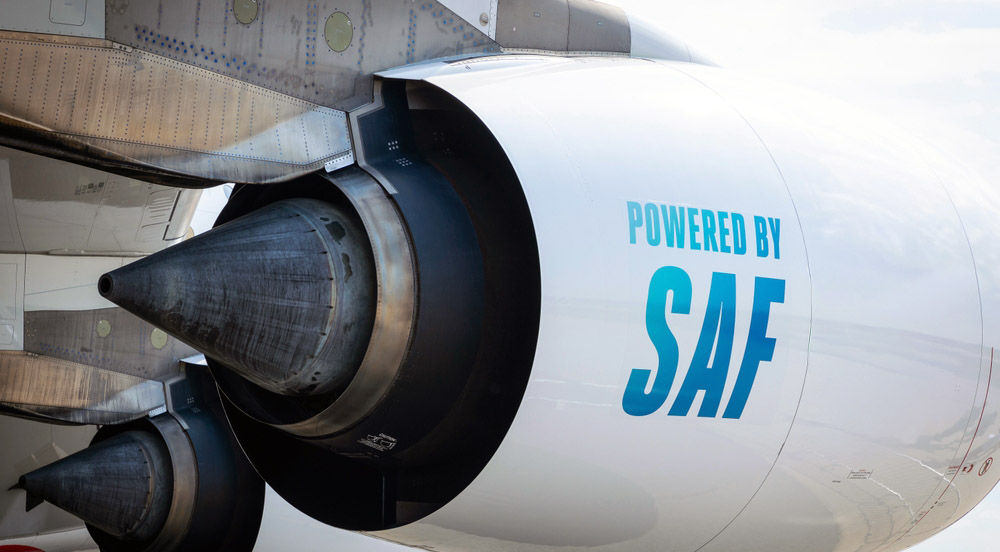
Sustainable Aviation Fuels: The Future of Green Air Travel

The aviation industry sits at the center of global discussions on climate change, sustainability, and carbon reduction. As air traffic continues to grow, aviation faces a unique decarbonization challenge: aircraft require high-energy-density liquid fuels, particularly for long-haul operations, where alternatives such as batteries or hydrogen are not yet commercially viable.
Against this backdrop, Sustainable Aviation Fuel (SAF) has emerged as the most credible and scalable solution available today. These sustainable fuels enable airlines to reduce lifecycle greenhouse gas emissions while continuing to operate existing aircraft, engines, and fuelling infrastructure—without compromising safety or reliability.
This article explores what SAF biofuel is, how it is produced, why it matters, and how it is being introduced safely and responsibly across the global aviation fuel supply chain.
What is Sustainable Aviation Fuel (SAF)?
Sustainable Aviation Fuel (SAF) is an aviation fuel made from renewable or recycled feedstocks, such as waste oils, agricultural residues, municipal waste, or captured carbon. They are designed to be used as a blend with conventional kerosene-based jet fuel, enabling immediate emissions reductions without requiring changes to aircraft engines or airport fuelling systems.
From a technical standpoint, aviation fuel standards do not certify “SAF” as a standalone fuel. Instead, synthetic components—known as Synthetic Blending Components (SBCs)—are qualified under ASTM D7566 and blended with conventional jet fuel to produce Semi-Synthetic Jet Fuel (SSJF). Once blended and certified, SSJF is fully interchangeable with conventional Jet A or Jet A-1 and is handled, stored, and delivered exactly the same way.
Critically, the term «SAF» is widely used by regulators, airlines, and the public, but sustainability is determined separately through lifecycle carbon accounting and Proof of Sustainability (PoS) certification—not by fuel specifications themselves. This certification process often involves the use of renewable energy certificates to ensure the sustainable nature of the fuel production.
The Importance of Sustainable Aviation Fuel
The aviation sector faces a unique challenge: while other industries can switch to renewable energy sources relatively easily, aircraft require high-energy-density liquid fuels for long-distance travel. Batteries and hydrogen are promising but not yet commercially viable for large-scale aviation.
Here’s where sustainable aviation fuel becomes crucial. By replacing fossil-based jet fuel with SAF, airlines can achieve substantial reductions in greenhouse gas emissions without disrupting current operations. Additionally, SAF contributes to broader environmental goals by:
- Lower lifecycle carbon emissions, typically 50–80% compared to fossil jet fuel, depending on feedstock and production pathway
- Reduced particulate and sulfur emissions, improving local air quality around airports
- Compatibility with existing infrastructure, avoiding costly and disruptive system changes
For governments and regulators, SAF is an essential piece of the puzzle for meeting international climate commitments, such as ICAO CORSIA (Carbon Offsetting and Reduction Scheme for International Aviation), and regional mandates, including EU ReFuelEU Aviation, which introduces mandatory SAF blending obligations and plans to achieve net-zero emissions by 2050. These initiatives often include uptake mandates to accelerate the adoption of sustainable fuels in the aviation industry.
How Is SAF Produced?
SAF can be produced using several approved pathways, each defined as an Annex under ASTM D7566, all of which convert non-conventional feedstocks into aviation-grade hydrocarbons. The most common production routes include:
-
HEFA (Hydroprocessed Esters and Fatty Acids): HEFA converts waste oils, fats, and greases into renewable jet fuel through hydrotreating. Many current sustainable aviation fuels on the market come from HEFA technology.
-
Fischer–Tropsch (FT) Synthesis: This method converts syngas—derived from biomass, municipal solid waste, or even captured CO₂—into liquid hydrocarbons suitable for jet fuel.
-
Alcohol-to-Jet (ATJ): Alcohols such as ethanol or isobutanol are chemically converted into aviation biofuel.
-
Emerging Pathways: Future innovations include using algae, carbon capture technologies, and power-to-liquid processes (PtL) that combine renewable electricity with captured CO₂ and hydrogen.
Each of these production pathways has its advantages and challenges, but the common goal is to produce low-carbon jet fuel that can be scaled efficiently while meeting strict aviation safety standards and environmental safeguards.
SAF Is a “Drop-In” Fuel—What That Really Means

Once certified and blended, SAF is:
- Fully interchangeable with conventional jet fuel
- Compatible with existing aircraft, engines, hydrant systems, refuellers, and fuel farms
- Delivered to aircraft with no operational or maintenance changes required
Importantly, SAF blending does not occur at airports under normal operations. Blending and certification are performed upstream—at refineries or dedicated terminals—before the fuel enters airport systems, in line with JIG, EI 1533, and Def Stan 91-091 requirements. This process ensures that SAF truly functions as a drop-in fuel, seamlessly integrating into existing aviation infrastructure.
Sustainability and Certification
While fuel specifications confirm that SAF is safe to fly, sustainability is verified separately. Proof of Sustainability (PoS) certification demonstrates that the fuel meets environmental criteria such as greenhouse gas reduction, responsible feedstock sourcing, and compliance with regulatory frameworks.
This distinction is important:
- Fuel quality ensures airworthiness
- Sustainability certification supports environmental claims and regulatory compliance
Both elements are required for high-integrity SAF to deliver its full value to airlines and governments alike. The certification process takes into account the entire lifecycle emission reduction, from feedstock to fuel use, ensuring a comprehensive approach to sustainability.
Aviation Biofuel Suppliers and Market Growth
As demand for SAF biofuel grows, several aviation biofuel suppliers are emerging worldwide. Key players include energy companies, biofuel producers, and technology innovators working to bring renewable jet fuel to market at scale.
Airlines such as United, Delta, and Lufthansa have already signed agreements with suppliers to secure SAF for their fleets. Airports in Europe, North America, and parts of Asia are beginning to integrate SAF into their fuel supply chains. Governments are also providing incentives, subsidies, and mandates to accelerate adoption and address challenges related to feedstock availability.
The growing supplier network is vital because, without significant investment in production capacity, SAF biofuel will remain a niche product. Industry experts predict exponential growth in SAF demand over the next decade, driven by regulatory mandates and consumer pressure for sustainable travel.
The Future of Sustainable Aviation Fuel
Looking ahead, SAF biofuel is expected to play a central role in decarbonizing aviation and reducing global CO2 emissions from air transport. As production technologies improve and economies of scale drive costs down, SAF could transition from a limited resource to the industry standard. Analysts expect that by 2050, SAF could account for the majority of jet fuel consumption, enabling aviation to meet its climate targets.
Airlines and manufacturers are also exploring blended solutions, combining SAF with innovative technologies such as electric propulsion for regional flights and hydrogen for future long-haul aircraft. Ultimately, SAF will act as a bridge between today’s aviation systems and tomorrow’s zero-emission technologies.
The push toward SAF is not just about reducing carbon—it is about ensuring the long-term viability of aviation in a world that demands sustainability. For airlines, airports, governments, and passengers, investing in SAF biofuel means investing in a cleaner, greener future for global air travel.
Conclusion
Sustainable aviation fuel is more than just an alternative to conventional jet fuel—it is the cornerstone of sustainable aviation. By leveraging renewable resources, advanced production processes, and growing supplier networks, SAF offers a realistic pathway to decarbonizing one of the world’s most challenging industries.
While challenges remain in cost, supply, and scalability, the momentum behind sustainable aviation fuel is undeniable. With increasing support from regulators, suppliers, and airlines, renewable jet fuel is set to become a defining factor in aviation’s journey toward a low-carbon future.
The transition to SAF biofuel may not happen overnight, but every flight powered by it brings us one step closer to a sustainable, climate-friendly aviation industry.

 Repostadores
 Dispensadoras
 Aplicaciones Militares
 Repuestos
 Mantenimiento y reparaciones
 Restauración de vehículos
 Inspecciones
 Gestión del ciclo de vida del vehículo


