

Small Fuel Leak on Aircraft Refueller: Why It Must Be Reported

Small Fuel Leak on Aircraft Refueller: Why It Must Be Reported
During last week’s ARC LinkedIn quiz, we asked a practical question that many aviation fuel professionals will recognise immediately:
During a daily inspection, you notice a minor hydraulic or fuel leak near a hose reel connection on a refueller. What should be done?
A. Continue operations and monitor it during the shift
B. Report immediately and assess before operation
C. Clean the leak and continue fuelling
The correct answer is:
B — Report immediately and assess before operation
At first glance, this might seem like a minor maintenance problem. The leak is described as small. It was identified before the refueller was put into service. The vehicle may still look operational. In a busy airport setting, the tendency might be to clean the area, keep the unit available, and observe it during the shift.
That is exactly where risk begins.
In aviation refuelling, a leak is not only a housekeeping issue. It may indicate loss of system integrity, component wear, incorrect assembly, seal degradation, pressure stress, hose deterioration, coupling movement, or hydraulic malfunction. Until the source is identified, the severity is not known. The industry standard specifically addresses equipment maintenance, mobile fuelling equipment, hose inspection, pressure control, interlocks, unserviceable equipment, defect reporting, return to service, and records as part of aviation fuelling facility integrity management.
The correct operational decision is therefore clear: do not normalise the defect. Report it, assess it, control it, and only return the refueller to service when the condition has been technically verified.
Why a Small Leak Is Not a Small Matter
Aircraft refuellers are specialised vehicles designed for fuel transfer near aircraft, ground support equipment, passengers, ramp personnel, and ignition-sensitive zones. They transport fuel from a fuel farm to an aircraft and pump it into the aircraft’s tanks, typically through pressurised underwing connections for commercial planes. These refuellers are equipped with pumping, filtration, pressure control, and metering systems.
This means the hose reel area is not a passive storage point. It is connected to active fuel delivery, hose handling, pressure control, mechanical movement, and repeated operator interaction. A leak near this area can involve the delivery hose, hose coupling, swivel joint, reel pipework, hydraulic motor drive, pneumatic actuation, reel hub, hose-end nozzle, or another nearby component.
Refuellers may operate with peak flow rates up to 1,500 L/min, and dual-hose configurations can reach 3,000 L/min, depending on aircraft and system limitations. A small leak observed before operation must therefore be treated seriously because the equipment may later operate under pressure, flow, vibration, hose movement, and repeated reel operation.
The professional question is not: “Is the leak small enough to continue?”
The correct question is: “Do we understand the source, severity, and consequence before the equipment is used?”
Fuel Leak or Hydraulic Leak: Different Fluids, Same Discipline
The quiz specifically mentions either a fuel leak or a hydraulic leak near a hose reel connection. Although these are distinct issues, both require an immediate first step: report and evaluate before proceeding with operations.
A fuel leak presents immediate safety concerns including fire hazards, spills that could escalate, environmental contamination, slippery surfaces, vapour release, potential contamination of the operational area, and increased emergency response demands. NFPA 407 governs aircraft fuel servicing with liquid fuel and establishes essential fire safety standards for procedures, equipment, and facilities to safeguard personnel, aircraft, and property during ground fuel servicing activities.
In contrast, a hydraulic leak entails a different set of risks. It can impair the functioning of the hose reel, platform, stabilisers, hose lift system, or other hydraulic-assisted equipment. Such leaks may also cause slip hazards, pressure drops, overheating of components, spray risks, or loss of controlled movement. EI 1540’s guidelines for mobile equipment inspections emphasise checking hydraulic systems, oil leaks, oil condition, oil levels, and ensuring the smooth operation of devices such as elevating work platforms, hydrant hose lifts, and underwing hose support pantographs.
Operationally, the type of fluid involved influences diagnostic procedures, but the fundamental response remains the same: any active leak near critical fuelling or movement systems must be reported and thoroughly evaluated before the equipment resumes normal operation.
Why the Hose Reel Area Deserves Special Attention
The hose reel area is exposed to repeated movement, tension, bending, rolling, environmental conditions, vibration, and operator handling. On many refuellers, the hose reel area may also sit close to hydraulic drive components, reel hubs, swivel joints, pipework, supports, and hose-end equipment.
JIG 1 requires hose inspection under normal operating pressure and specifically calls for inspection for external damage, leakage, and other signs of weakness. It also requires the full circumference of the hose surface to be checked and calls attention to coupling slippage and sections close to couplings, because these areas are more prone to deterioration.
A leak near a hose reel connection may be visible at one point, but the actual source may be elsewhere. Industry best practice notes that kinking can damage the internal hose structure and that fuel may travel along the hose carcass and appear some distance away from the original damage point.
That is why cleaning alone is not enough. A visible wet mark may be the symptom, not the cause.
Why “Continue Operations and Monitor It” Is the Wrong Answer
Option A — continuing operations and monitoring the leak during the shift — may sound operationally convenient, but it transfers the risk from inspection mode into live operation.
Once the refueller is dispatched, the defect is no longer being evaluated in a controlled environment. It may be exposed to pump pressure, reel movement, aircraft turnaround pressure, vehicle movement, heat, vibration, and time constraints. If the leak worsens during fuelling, the operator is now managing the defect near an aircraft rather than in a controlled maintenance area.
A robust procedure should be established for reporting equipment defects identified during operations, maintenance, or inspection checks. In cases where defects arise on critical equipment or if there are equipment leaks, mobile equipment should be returned to the depot, keys removed, and out-of-service labels affixed.
This is the key message for professional teams: monitoring is not a control unless the defect has first been assessed and accepted under a defined procedure by authorised personnel.
Without assessment, “monitoring” can become an informal workaround. It can create inconsistent decision-making between shifts, reduce defect visibility, and normalise a condition that should trigger maintenance action.
Why “Clean the Leak and Continue Fuelling” Is Also Wrong
Option C — cleaning the leak and continuing fuelling — is also incorrect.
Cleaning may be part of the response, but it cannot be the full response. Cleaning removes visible evidence; it does not confirm that the leak has stopped. It does not identify whether the fluid is fuel, hydraulic oil, water, grease, or residue from previous work. It does not verify pressure integrity. It does not confirm that a hose, swivel, coupling, seal, or hydraulic component remains serviceable.
Industry best practice requires fuelling equipment to be maintained in sound condition to ensure a reliable and safe fuelling service, and it states that defects should be rectified without delay, with equipment removed from service if necessary.
This creates a useful distinction for operators:
Housekeeping removes contamination. Maintenance removes the defect.
A clean refueller can still be unsafe if the source of the leak remains active. Cleaning should support inspection, spill control, and safe working conditions. It should not replace defect reporting, technical assessment, and return-to-service verification.
What a Professional Response Should Look Like
The exact response must always follow the operator’s local procedures, airport requirements, OEM instructions, and applicable standards. However, the principle is simple: report, isolate if required, assess, correct, verify, and document.
Once a leak is detected, the operator should report it promptly to the responsible supervisor or maintenance personnel. The equipment should not enter normal service until the condition is assessed, especially if the leak appears active, recurring, pressure-related, or connected to a critical fuel or hydraulic component.
The assessment should identify the real source of the leak, not only where the fluid appears. Around a hose reel, this may involve the hose, coupling, swivel, reel pipework, valve, hydraulic motor, hydraulic hose, pneumatic line, or previous maintenance residue.
If fuel is involved, spill control, ignition source control, access restriction, and emergency escalation may be required. If a defect is confirmed, it should be corrected and verified through the appropriate maintenance action, which may include tightening, seal replacement, hose inspection, pressure testing, or functional testing.
Before return to service, the release decision should be based on evidence — not assumption. The defect, action taken, test result, and return-to-service decision should be recorded to support traceability, reliability tracking, and future maintenance planning.
The Maintenance Perspective: Small Leaks Can Reveal Larger Trends
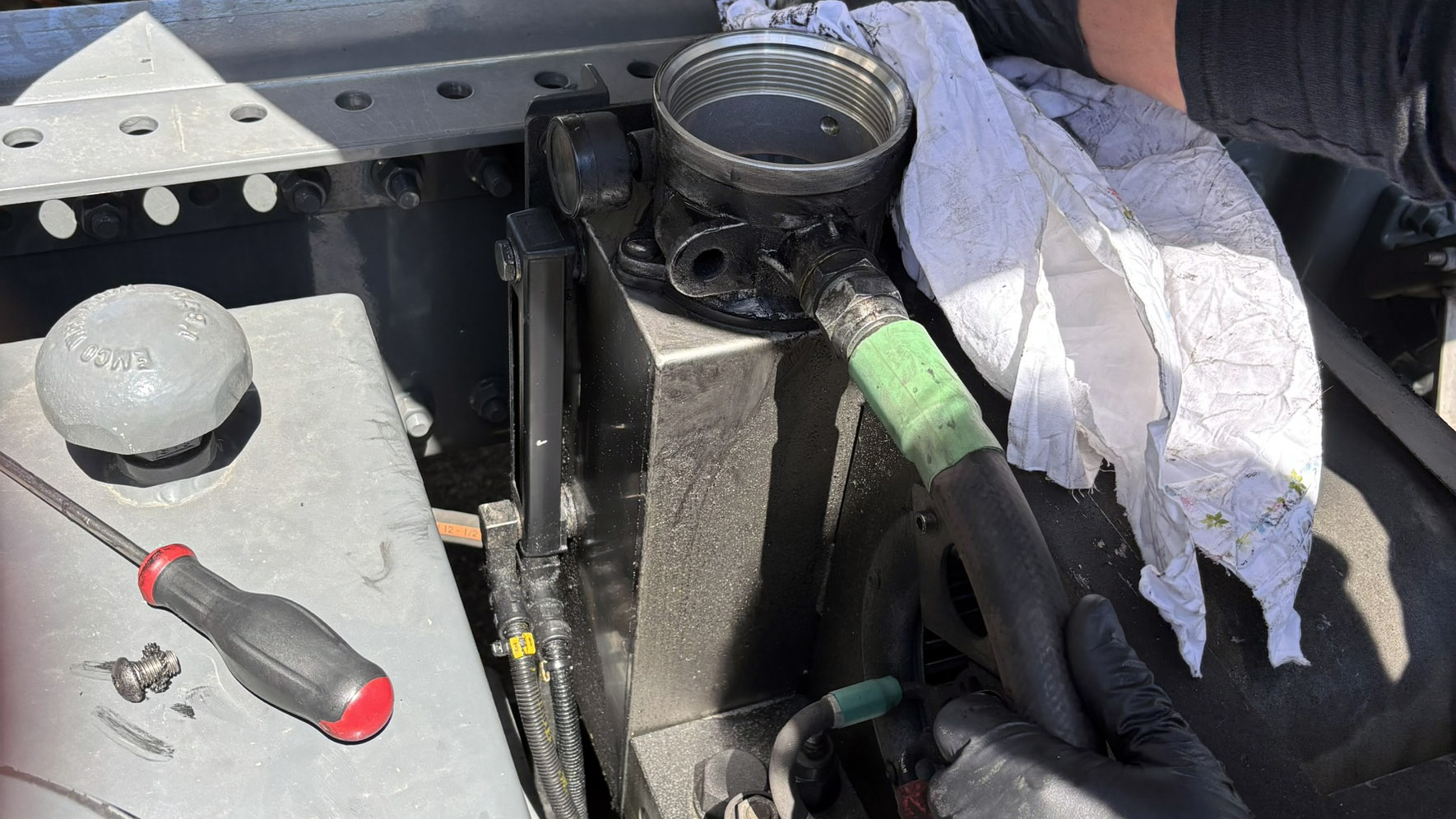
From a maintenance perspective, a small leak is valuable information. It may be an early sign of a developing failure mode.
Repeated small leaks in the same area may indicate hose routing issues, excessive bending radius, reel misalignment, vibration, unsuitable component condition, incorrect installation, seal compatibility issues, pressure fluctuation, or ageing equipment. EI 1540 the definitive international standard governing the design, construction, commissioning, maintenance, and testing of aircraft fuelling facilities recommends maintenance procedures that include comprehensive scheduling, formal maintenance programmes, trained personnel, detailed records, remedial actions, retesting results, random checks, and trend analysis from routine inspections and testing.
This is where professional maintenance culture moves beyond reactive repair. The issue is not only “fix this leak.” The better question is:
Why did the leak appear, and what does it tell us about the vehicle’s condition, operating pattern, and maintenance strategy?
Practical Inspection Focus Around the Hose Reel
When a leak is found near a hose reel connection, the inspection should not stop at the visible wet area. A practical technical assessment should consider the hose condition, hose-to-reel connection, coupling alignment, swivel joint, reel hub, hose supports, reel pipework, hydraulic motor drive, hydraulic hoses, pneumatic lines, control valves, and any nearby structural supports.
Industry best practice requires pressure fuelling nozzles and hydrant dispenser inlet couplers to be checked for leaks during every fuelling operation and checked for wear at least annually using appropriate manufacturer-approved gauges or instructions. Repairs should be carried out by trained and competent personnel using recommended tools.
Industry best practice for hoses identifies several abnormalities that necessitate immediate replacement, including soft spots, kinks, deformities, bulges, blisters, excessive abrasion that exposes reinforcement, cuts damaging the carcass textile fabric, or instances where a hose has been run over by a vehicle. Additionally, if a defect near the hose end is addressed by cutting and re-attaching couplings, it is essential to conduct hydrostatic pressure testing before returning the hose to service.
These requirements reinforce a simple operational point: visible leakage near a hose reel is not only a cleaning task; it is a trigger for integrity assessment.
Return to Service: Evidence Before Availability
A refueller should return to operation only when there is evidence that the defect has been understood and controlled.
For a minor non-active residue, the responsible person may determine that cleaning, observation, and documentation are sufficient under the local procedure. But for an active fuel or hydraulic leak, return to service may require repair, pressure testing, functional testing, and formal release.
That point matters commercially. Removing a refueller from service for assessment can feel inconvenient in the moment, but an uncontrolled defect during operations can cause far greater disruption: spill response, vehicle downtime, aircraft turnaround delays, urgent maintenance, customer escalations, and possible safety reporting.
ARC’s lifecycle article describes fuel trucks as mission-critical assets that affect safety, on-time performance, and operational efficiency, and it highlights preventive and corrective maintenance, downtime, compliance, and operational disruption as cost factors in lifecycle evaluation.
In other words, early reporting is not only a safety behaviour. It is an availability strategy.
Link With Other Refueller Safety Barriers
A leak response also connects with other safety barriers on the vehicle: the deadman system, emergency shutoff, pressure control system, interlocks, bonding system, filtration system, hose condition, and operator supervision.
Industry best practice identifies major items for routine checks and testing, including bonding wires, pressure and vacuum gauges, filtration systems, couplings and nozzles, pressure controllers and deadman systems, vehicle interlocks, hoses, hose-end strainers, fire extinguishers, electrical equipment, pumps, motors, valves, and emergency shutdown systems.
ARC’s published deadman article explains the deadman control as a key safety barrier that stops fuel flow when operator control is lost or released. The same philosophy applies to leak response: when equipment integrity is uncertain, the operation should return to a controlled state before fuel transfer begins.
The goal is not to rely on the operator’s attention to compensate for a known defect. The goal is to restore equipment integrity before the refueller is used.
The Professional Lesson From the Quiz
The correct answer to the quiz is not simply a rule-of-thumb response. It reflects a broader operating culture:
- Report the defect.
- Assess the source.
- Control the risk.
- Repair where required.
- Verify before return to service.
- Record the finding.
- Use the data to improve reliability.
Aviation fuelling is a high-consequence operational environment. Small leaks should never be allowed to become normal background conditions. Once defects are normalised, teams lose the opportunity to intervene early, maintenance data becomes weaker, and risk control becomes inconsistent.
The correct response — report immediately and assess before operation — protects personnel, aircraft, equipment, the airport environment, and operational continuity.
Conclusion: Do Not Clean and Continue — Report, Assess, Verify
A minor fuel or hydraulic leak near a refueller hose reel connection should never be treated as routine. It may be minor in appearance, but until the source is known, its operational significance is unknown.
Continuing operations and monitoring the leak transfers an unassessed defect into live service. Cleaning and continuing removes visible evidence without confirming system integrity. The professional answer is to report the finding immediately, assess the equipment before operation, make the area safe, repair or verify as required, and document the return-to-service decision.
At ARC NV, this is where maintenance, inspection, refurbishment, spare parts, and lifecycle support come together. ARC is a Belgium-based refueller construction, refurbishing, and service company with more than 30 years of experience serving civil and military aviation refuelling. ARC supports operators through inspections, maintenance and repairs, spare parts supply, refurbishment, and lifecycle management services for aviation refuelling vehicles.
Small leaks are easiest to control when they are found early. The safest, most reliable, and most cost-effective action is to treat them as early warning signs — not as minor inconveniences.
Contact ARC NV
If your operation is facing recurring leaks, hose reel issues, hydraulic failures, ageing components, or increasing refueller downtime, ARC NV can support with inspection, maintenance, refurbishment, spare parts, and lifecycle evaluation.
Contact ARC NV to discuss how we can help keep your aviation refuelling equipment safe, reliable, compliant, and ready for operation.
Contact us today: ✉️ question@arc-refuellers.be
Let’s discuss how we can help keep your aviation refuelling equipment safe, reliable, compliant, and ready for operation.

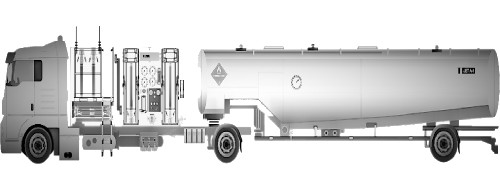 Ravitailleurs
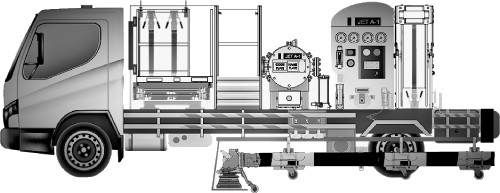 Distributeurs
 Applications Militaires
 Pièces de rechange
 Entretien et réparations
 Remise à neuf de véhicules
 Contrôles
 Gestion du cycle de vie des véhicules

